
Text-to-speech technology transforms written content into spoken words, bridging the gap between digital text and human-like communication. Google Cloud Text-to-Speech stands at the forefront of this revolution, offering developers powerful tools to create voice applications that sound remarkably natural. This comprehensive guide explores how to harness Google’s machine learning technology for building voice-enabled applications that enhance user experiences across industries.
Key Takeaways
- Google Cloud Text-to-Speech provides 220+ voices across 40+ languages with neural network technology for natural-sounding speech.
- The API integrates seamlessly with existing applications through simple REST calls and client libraries for major programming languages.
- SSML markup enables fine-tuned control over speech patterns, pronunciation, and audio characteristics for enhanced user experiences.
- Pricing scales from free tier usage to enterprise levels, making it accessible for startups and large organizations alike.
- Real-world applications span e-learning, accessibility tools, customer service automation, and content creation platforms.
Google Cloud Text-to-Speech represents a significant leap forward in voice synthesis technology, making professional-grade speech generation accessible to developers worldwide.
Understanding Google Cloud Text-to-Speech Capabilities
Source: Canva
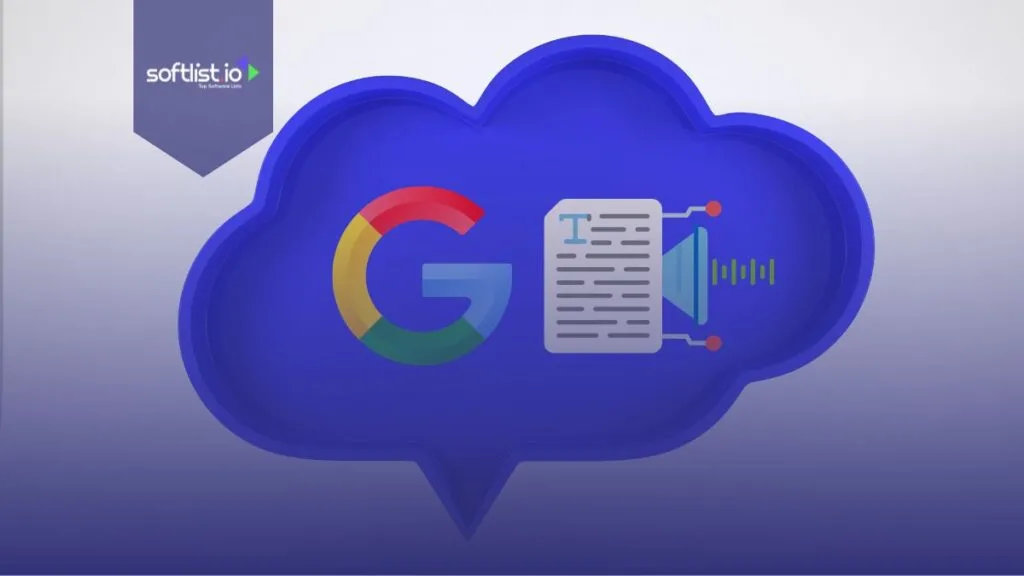
Google Cloud Text-to-Speech leverages the same advanced technology powering Google Translate and Google Voice services. The platform converts text into lifelike speech using neural networks trained on vast datasets of human speech patterns. This approach produces voices that capture natural intonation, rhythm, and emotional nuance that traditional text to voice ai systems often lack.
The service supports multiple voice types, including Standard voices for basic applications and WaveNet voices for premium quality output. Neural2 voices, the latest addition, deliver even more natural-sounding speech with improved prosody and pronunciation accuracy.
Meet with dedicated startup experts, connect with startup communities, and access Google-wide discounts


Voice Selection and Language Support
Google’s text-to-speech platform offers extensive language coverage with voices spanning major global languages and regional variants. Each language includes multiple voice options with different genders, ages, and speaking styles. Developers can select voices that match their target audience demographics and application requirements.
The platform regularly adds new voices and languages, expanding accessibility for global applications.
Audio Format Options
The API supports various audio formats to meet different application needs:
- MP3 for web applications and streaming
- WAV for high-quality audio processing
- OGG for open-source compatibility
- LINEAR16 for real-time applications
- MULAW and ALAW for telephony systems
Setting Up Google Cloud Text-to-Speech Integration
Source: Canva
Getting started with Google Cloud Text-to-Speech requires a Google Cloud Platform account and proper authentication setup. The process involves creating a project, enabling the Text-to-Speech API, and generating service account credentials. Most developers complete the initial setup within 15-20 minutes following Google’s documentation.
Authentication uses JSON key files or Application Default Credentials for secure API access. The setup process ensures your applications can make authorized requests to Google’s speech synthesis servers.
API Authentication Process
- Create a new Google Cloud Platform project
- Enable the Cloud Text-to-Speech API
- Create a service account with appropriate permissions
- Download the JSON credentials file
- Set the GOOGLE_APPLICATION_CREDENTIALS environment variable
Making Your First API Call
The basic API request structure includes text input, voice selection, and audio configuration parameters. Here’s a simple example using Python:
python
from google.cloud import texttospeech
client = texttospeech.TextToSpeechClient()
synthesis_input = texttospeech.SynthesisInput(text=”Hello world”)
voice = texttospeech.VoiceSelectionParams(
language_code=”en-US”,
ssml_gender=texttospeech.SsmlVoiceGender.NEUTRAL
)
audio_config = texttospeech.AudioConfig(
audio_encoding=texttospeech.AudioEncoding.MP3
)
response = client.synthesize_speech(
input=synthesis_input, voice=voice, audio_config=audio_config
)
| Feature | Standard Voices | WaveNet Voices | Neural2 Voices |
|---|---|---|---|
| Audio Quality | Good | Excellent | Premium |
| Processing Speed | Fast | Moderate | Moderate |
| Cost per Character | $4.00/1M chars | $16.00/1M chars | $16.00/1M chars |
| Natural Sound | Basic | High | Highest |
| SSML Support | Full | Full | Enhanced |
Advanced Voice Customization Techniques

Source: Canva
Speech Synthesis Markup Language (SSML) provides granular control over voice output characteristics. Developers can adjust speaking rate, pitch, volume, and add pauses or emphasis to create more engaging audio experiences. SSML tags work similarly to HTML markup, wrapping text with instructions for the speech synthesizer. Explore the API reference.
Custom voice tuning helps applications sound more natural and contextually appropriate for specific use cases.
- Adjust speaking rate from 0.25x to 4.0x normal speed
- Modify pitch from -20.0 to +20.0 semitones
- Control volume gain from -96.0 to +16.0 dB
- Insert pauses with specific durations
- Emphasize words or phrases for clarity
- Customize pronunciation with phonetic spelling
Real-World Application Scenarios
E-learning platforms use Google Cloud Text-to-Speech to create audio versions of written content, making educational materials accessible to visual learners and students with reading difficulties. The technology enables automatic generation of course narrations, quiz instructions, and interactive learning experiences. Educational applications benefit from consistent voice quality and multilingual support for global audiences.
Customer service automation represents another major use case where natural-sounding voices improve user satisfaction and reduce operational costs.
Accessibility and Assistive Technology
Screen readers and assistive devices integrate Google’s text-to-speech capabilities to help users with visual impairments navigate digital content. The natural voice quality reduces listener fatigue during extended use sessions. Applications serving accessibility needs require careful voice selection and speech rate optimization for optimal user experiences.
Content Creation and Media Production
Podcasters, video creators, and digital marketers use text-to-speech technology for rapid content production and localization. The service enables creation of multilingual audio content without hiring voice actors for each language. Content creators appreciate the consistency and scalability that automated speech synthesis provides for their production workflows.
Performance Optimization and Cost Management
Google Cloud Text-to-Speech pricing follows a pay-per-use model based on character count and voice type selection. The service includes a generous free tier with 1 million characters per month for WaveNet voices and 4 million characters for Standard voices. Cost optimization strategies include caching frequently used audio files and selecting appropriate voice types for different content categories.
Performance optimization focuses on minimizing latency and managing concurrent requests effectively for real-time applications.
Caching and Storage Strategies
- Cache generated audio files for repeated content
- Use Cloud Storage for long-term audio asset management
- Implement intelligent cache invalidation for dynamic content
- Consider audio compression for bandwidth optimization
- Monitor usage patterns to optimize voice selection
Rate Limiting and Quota Management
The API enforces rate limits to ensure fair usage and system stability. Applications handling high-volume requests should implement proper retry logic and request queuing mechanisms. Google provides quota monitoring tools to track usage patterns and avoid unexpected service interruptions.
Enterprise applications often require quota increases through Google Cloud support channels.
| Usage Tier | Monthly Characters | Standard Voice Cost | WaveNet Voice Cost | Best For |
|---|---|---|---|---|
| Free Tier | 0-4M Standard, 0-1M WaveNet | $0 | $0 | Development, Testing |
| Small Business | 4M-50M | $4.00/1M | $16.00/1M | Small Apps, Prototypes |
| Enterprise | 50M+ | $4.00/1M | $16.00/1M | Large-scale Applications |
Alternative Platforms for Voice and Productivity Solutions
While Google Cloud Text-to-Speech excels at voice synthesis, several complementary platforms enhance productivity workflows and application development processes.
FocusMe
FocusMe provides website and application blocking tools that help developers maintain concentration during voice application development sessions. The platform integrates well with development workflows where distraction-free coding environments improve the quality of text-to-speech implementation projects.
Conquer your digital distractions with our fully-customizable content blocker that prevents workarounds. Change your online habits to instantly win back wasted time.

Dooey
Dooey offers task automation capabilities that streamline repetitive processes in voice application development and content management. The platform helps teams automate audio file processing, content updates, and deployment workflows for text-to-speech enabled applications.
As a top tier online training bootcamp and one of the world’s leading certification providers, we partner with companies and individuals to provide training and coaching that ensures working professionals achieve their career goals.

Process Street
Process Street delivers workflow management tools that help development teams standardize voice application testing, quality assurance, and deployment procedures. The platform ensures consistent implementation of text-to-speech features across different projects and team members.
Process Street is a user-friendly, no-code platform that helps teams efficiently manage recurring tasks, streamlining workflows and improving productivity without the need for technical skills.

ProWorkflow
ProWorkflow provides project management capabilities specifically designed for creative and technical teams working on voice-enabled applications. The platform tracks development milestones, manages client feedback on voice quality, and coordinates multi-language voice implementation projects.
ProWorkflow simplifies project management by easily assigning staff, tracking time, and rescheduling tasks, while streamlining quoting and invoicing.

Keap
Keap offers customer relationship management features that complement voice-enabled customer service applications built with Google Cloud Text-to-Speech. The platform helps businesses track customer interactions and optimize voice-based communication strategies for better engagement results.

Replica Studios
Replica Studios specializes in delivering emotive voice acting, offering developers vibrant voices that exceed the capabilities of the standard Google Cloud TTS solutions. This platform is perfect for interactive experiences, games, or any production that needs more dynamic and emotive voice acting.
Bring your characters to life with our amazing range of AI voices, from wizards to warriors and everything in between.

Play.ht
Play.ht is a cutting-edge TTS platform for multilingual content delivery with a universal solution for global audiences. It has plug-and-play compatibility with Google Cloud TTS and offers added audio content features and enhanced accessibility via its extensive range of languages and voice choices.
Generate realistic Text to Speech (TTS) audio using our online AI Voice Generator and the best synthetic voices.

Murf.ai
Murf.ai is also good at creating studio-grade AI voiceovers and is, therefore, a perfect tool to compare or use as a backup option for narration requirements. It is well-suited to create professional-grade audio for podcasts, presentations, or video voiceovers and provides a rich feature set that complements content creation with Google Cloud TTS.
Make studio-quality voiceovers in minutes. Use Murf's lifelike AI voices for podcasts, videos, and all your professional presentation.

Final Thoughts
Google Cloud Text-to-Speech transforms how developers approach voice-enabled applications, offering professional-grade speech synthesis that rivals human narration quality. The platform’s combination of advanced neural networks, extensive language support, and flexible integration options makes it an ideal choice for applications ranging from accessibility tools to customer service automation.
Success with Google Cloud Text-to-Speech depends on understanding voice selection, optimizing SSML markup, and implementing proper caching strategies for cost-effective scaling.
Try experimenting with the API to see how it can enhance your projects. Whether for speech recognition or engaging voice interfaces, Google Cloud Text-to-Speech offers the accuracy and flexibility to bring your ideas to life. Subscribe and read our Top 10 Text-To-Speech Generator to learn more.
Frequently Asked Questions
What are the benefits of using Google Cloud TTS?
Google Cloud Text-to-Speech offers natural-sounding voices powered by advanced neural networks, extensive language support with 220+ voices across 40+ languages, flexible pricing with generous free tiers, enterprise-grade reliability and security, and seamless integration with existing applications through comprehensive APIs and client libraries.
How does Google Cloud Text-to-Speech work?
The service uses machine learning models trained on large datasets of human speech to convert text input into natural-sounding audio output. The system processes text through neural networks that understand context, pronunciation, and prosody to generate speech that closely mimics human vocal patterns and intonation.
How to make Text-to-Speech sound natural?
Natural-sounding speech requires careful voice selection matching your audience demographics, SSML markup for controlling pace and emphasis, appropriate punctuation in source text for natural pauses, testing different voice types to find optimal matches, and fine-tuning speaking rates and pitch adjustments based on content type and user feedback.
How to use Google Cloud Speech-to-Text?
Google Cloud Speech-to-Text works as the reverse process, converting audio input into text output through similar machine learning technology. The service requires audio file uploads or streaming input, language specification, and returns transcribed text with confidence scores and timing information for various applications.
What are the limitations of Google text to speech?
Current limitations include character limits per request, rate limiting for high-volume applications, limited emotional range in synthetic voices compared to human speakers, pronunciation challenges with specialized terminology or proper names, and dependency on internet connectivity for real-time applications requiring consistent audio output.