AI agents are rapidly transforming how businesses operate, automate, and innovate. These intelligent systems—whether digital or physical—can perceive their environment, make decisions, and act independently to achieve defined goals. From streamlining workflows to enhancing customer experiences and improving decision-making, AI agents are becoming indispensable across industries.
Powered by technologies like machine learning, NLP, and large language models, they not only execute tasks but continuously learn and adapt. In this blog, we’ll explore what AI agents are, the different types that exist, why they matter, and sample platforms you can explore to future-proof your business operations and stay ahead.
Key Takeaways
- AI agents are systems that act independently to achieve goals and solve tasks.
- They sense data, process context, make decisions, and learn from outcomes.
- Types include reflex, goal-based, utility-based, learning, and multi-agent systems.
- They boost efficiency, automate complex tasks, and support smarter decision-making.
- Commonly used in healthcare, finance, retail, and manufacturing to drive innovation.
What Are AI Agents?
Source: Canva
AI agents are intelligent systems or software programs designed to perceive their environment, make decisions, and act to achieve defined goals. These agents operate with autonomy—whether as digital tools, such as chatbots and virtual assistants or in physical form, such as robots and self-driving cars.
Core traits of AI agents include:
- Autonomy: Perform tasks independently without human intervention.
- Perception: Collect and interpret data from their surroundings.
- Decision-Making: Analyze inputs to determine the most effective course of action.
- Adaptability: Learn from outcomes and refine performance over time.
How Do AI Agents Work?

Source: Canva
AI agents operate by integrating multiple advanced technologies, including machine learning, natural language processing (NLP), and large language models (LLMs), such as GPT or Claude.
These components allow agents to interpret data, make decisions, and act autonomously in both digital and physical environments. Below is a detailed breakdown of a typical AI agent workflow:
Goal Initialization
The agent begins with a defined objective or task, which can be manually input by a human or generated by another system. Goals can range from answering a customer support ticket to navigating a robot through a warehouse.
Perception
The agent gathers data from its environment using various input methods:
- APIs (for digital systems)
- Sensors (in robotics and IoT)
- User input (text, voice, or gestures)
This step enables real-time situational awareness.
Data Processing & Contextual Understanding
Using LLMs and AI models, the agent processes the collected data to understand context, intent, and constraints. NLP models help decode human language, while computer vision and structured data models handle images, numbers, or event logs.
Decision-Making
The agent evaluates possible strategies or actions based on decision trees, reinforcement learning models, or rule-based logic. It considers factors like success probability, resource availability, and time sensitivity to choose the optimal path.
Action Execution
The agent performs the selected action. Examples include:
- Sending a response email
- Automating a workflow in a CRM
- Adjusting machinery in a smart factory
- Booking an appointment via a chatbot
Learning and Feedback Loop
After acting, the agent monitors the results using built-in metrics or external feedback. With reinforcement learning or fine-tuned heuristics, it updates its internal model to improve future performance and adaptability.
Types of AI Agents

Source: Canva
AI agents can be categorized based on their capabilities and complexity.
The main types include:
| Type | Description | Example Use Case |
| Simple Reflex Agents | Act based on current perceptions using “if-then” rules. | Thermostats, basic automation |
| Model-Based Reflex Agents | Maintain an internal model to track the environment and inform actions. | Robot vacuum cleaners |
| Goal-Based Agents | Make decisions to achieve specific goals, planning steps as needed. | Navigation systems |
| Utility-Based Agents | Choose actions based on a utility function to maximize performance. | Financial trading bots |
| Learning Agents | Continuously learn and adapt from experience to improve performance. | Personalized recommendation engines |
| Hierarchical Agents | Operate in structured levels, with higher-level agents overseeing strategy. | Multi-agent enterprise systems |
| Multi-Agent Systems | Multiple agents collaborate to solve complex problems. | Supply chain optimization |
Why AI Agents Matter

Source: Canva
As businesses and industries become increasingly data-driven and automated, AI agents are emerging as essential tools for maintaining a competitive edge. Their ability to act autonomously, learn from experience, and interact intelligently with both systems and humans is reshaping how work gets done across every sector.
1. Driving Business Efficiency
AI agents streamline operations by automating complex, multi-step workflows that traditionally required human oversight. From handling customer onboarding to processing invoices, they reduce operational bottlenecks and minimize errors.
Operating 24/7, these agents not only reduce labor costs but also enable businesses to scale faster without proportionally increasing headcount.
2. Enhancing Decision-Making
Equipped with real-time data and predictive analytics, AI agents help businesses act faster. Agents in multiple sectors detect anomalies, forecast trends, and recommend actions. Agents share insights across systems, and experts expect AI use to rise as agents will become vital for decision-making in areas like finance.
3. Transforming Customer Experiences
AI agents, such as chatbots and voice assistants, provide instant, personalized support across various channels. They can answer questions, resolve complaints, and even complete transactions—without human intervention.
It will not only boost customer satisfaction and retention but also ensure consistent brand interactions 24/7.
4. Enabling Innovation in Automation
AI agents push automation beyond repetitive tasks. They’re now capable of handling nuanced challenges, such as detecting fraud patterns, managing supply chain disruptions, and protecting systems from cybersecurity threats. These intelligent systems adapt to real-world changes, making them a cornerstone of digital transformation efforts.
5. Adapting Across Industries
AI agents are not limited to tech companies—they’re transforming traditional sectors, too. In healthcare, they assist in diagnosing diseases and managing patient records. In manufacturing, they oversee predictive maintenance and optimize production lines to ensure efficiency.
In retail, they personalize shopping experiences and manage inventory autonomously. Their versatility makes them essential in almost every modern industry.
Sample AI Agents You Can Explore

Source: Canva
If you’re considering implementing AI agents in your workflow, consider exploring these standout platforms. These tools offer unique combinations of automation, content generation, and intelligent decision-making capabilities suited to various industries.
Ocoya
Source: Ocoya
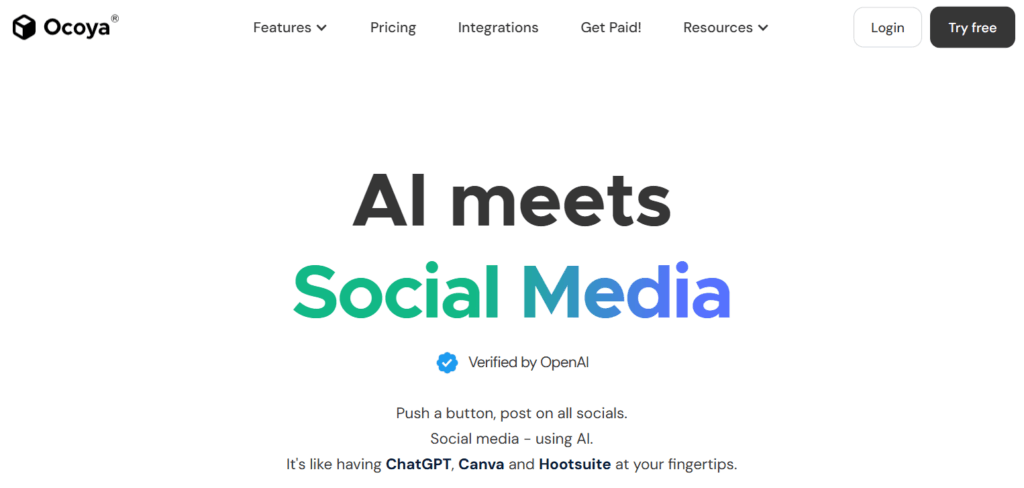
Ocoya is a marketing-focused AI platform that streamlines campaigns through:
- Social media automation
- Content scheduling, and
- AI copywriting.
Ideal for marketers managing multiple platforms, it feels like using an AI assistant on demand. AI agents analyze trends, optimize posts, and suggest captions. Think of AI agents as smart digital teammates. This new AI tool offers workflows powered by personal AI features.
AI agents even adapt to your brand’s tone and performance data. These agents are built for efficiency and scalability, making them essential for marketing teams aiming to stay ahead in a fast-evolving digital landscape.
Key Features:
- AI-powered content generation
- Automated social media scheduling
- Real-time analytics
Best For: Social media managers, solopreneurs, and marketing agencies seeking a one-stop content automation tool.

AdCreative.ai
Source: AdCreative.ai
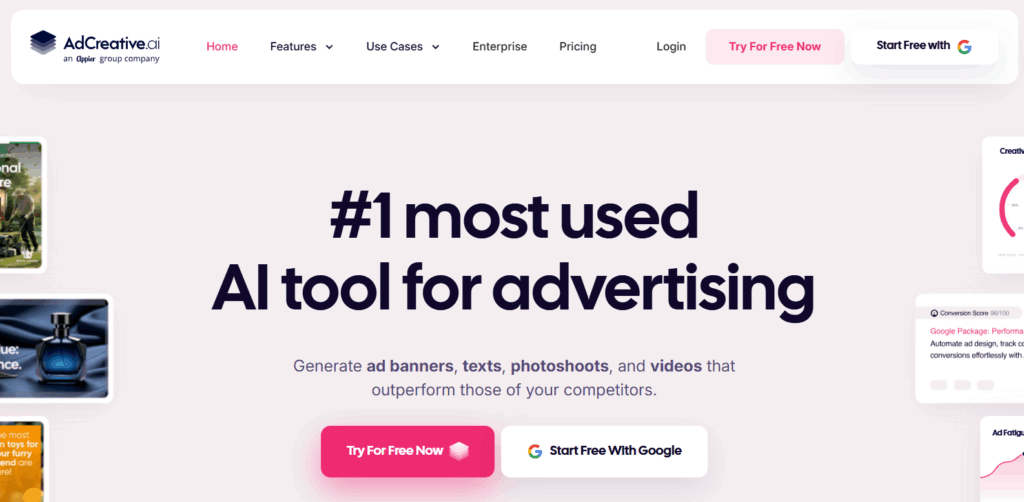
AdCreative.ai utilizes AI to generate high-converting ad creatives rapidly. It analyzes brand data and audience insights to produce optimized images and text. By deploying AI, AI agents automate creative workflows, saving time and boosting efficiency. AI agents leverage engagement data to tailor content, while agents improve performance through continuous learning.
AI agents can handle complex tasks, making it vital to ensure that your AI systems align with goals. As AI agents become more advanced, they will drive future AI innovations in marketing, offering smarter, faster solutions for audience targeting and conversion-focused design.
Key Features:
- Bright ad copy and image generation
- Creative scoring with predictive analytics
- A/B testing support
Best For: Advertisers, performance marketers, and eCommerce brands aiming to scale paid ad campaigns efficiently.
Generate high-conversion ad assets, gain actionable insights to optimize your campaigns, analyze competitors' performance and score your creatives before media spend – all on one platform.

AI Top Tools
Source: AI Top tools
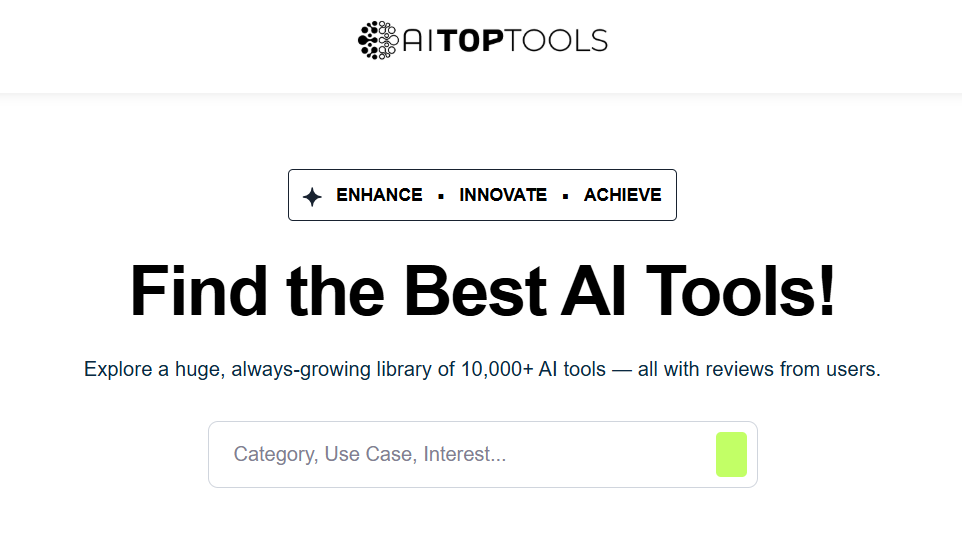
AI Top tools is an AI agent directory platform that curates the best tools across categories, helping users discover high-performing AI solutions with detailed reviews, use cases, and affiliate access. It makes AI adoption easier by categorizing tools based on function, capability, and efficiency. If you’re exploring types of intelligent agents or evaluating lower-level agents for automation, this platform helps clarify how AI agents can perform tasks autonomously and intelligently.
You’ll also see how AI agents continually evolve through learning models, making the directory ideal for those exploring advanced AI agents for complex workflows. With real-world examples of what AI agents may accomplish in different industries, the platform bridges discovery and decision-making for AI-driven productivity.
Key Features:
- Curated AI tool directory
- Tool comparison and categorization
- Affiliate-friendly access
Best For: Affiliate marketers, tech reviewers, and decision-makers researching AI implementation tools.
Gain access to expert insights, tips, and strategies on how to leverage AI tools effectively for marketing and productivity!

AI Agent Store
Source: AI Agent store
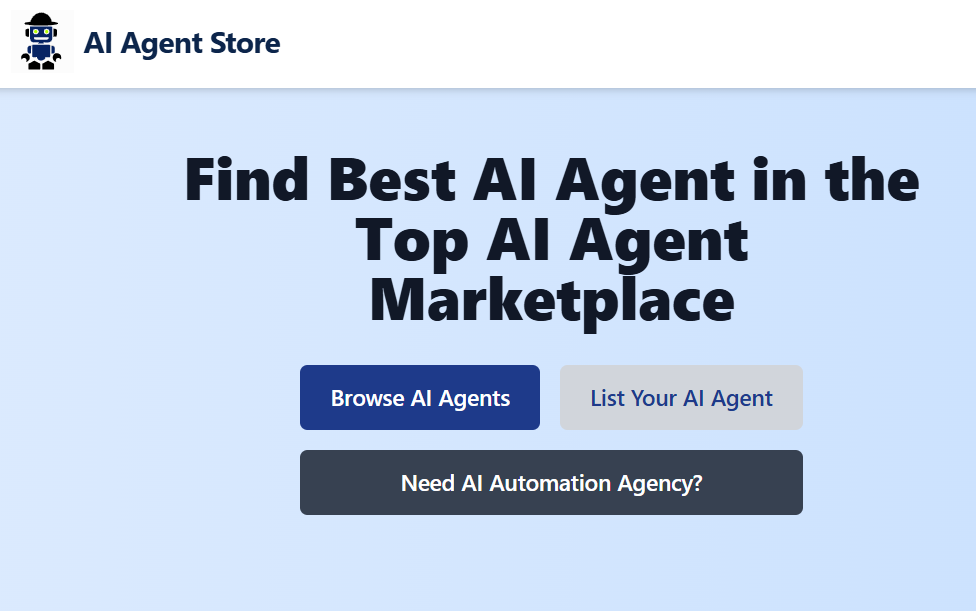
AI Agent store is a marketplace of pre-built AI agents ready to deploy for business tasks like customer service, lead generation, and automation. These AI agents are designed to streamline operations and guide the best course of action. With real-time decision-making, AI agents can make processes faster and more efficient.
The platform simplifies the development and deployment of AI, offering a wide range of AI applications. As the role of agents in AI grows, the focus remains on responsible AI, ensuring ethical and transparent use across industries. Ideal for businesses seeking scalable, intelligent solutions without starting from scratch.
Key Features:
- Ready-to-deploy AI agents
- No-code customization options
- Support for CRM and eCommerce integrations
Best For: Startups, SaaS companies, and operations teams wanting quick AI solutions without building from scratch.
Think of it as a store filled with specialized AI assistants, each designed to help in different ways. Buy or find a free AI agent suitable for the job which needs to be done.

Conclusion
AI agents are redefining how we work, automate, and make decisions. With their ability to learn, adapt, and act independently, they’re powering innovation across industries. As technology evolves, embracing AI agents will be crucial for businesses seeking to remain competitive, efficient, and prepared for the future of intelligent automation.
Struggling to choose the right software? Softlist.io simplifies the process. With clear reviews and practical insights, you can confidently find the Top 10 Automation Software—no guesswork, no hassle, just smart, informed choices.
FAQs
How Do AI Agents Learn and Adapt Over Time?
AI agents adapt through learning mechanisms like reinforcement learning, continuous data feedback, and advanced AI techniques. By analyzing past outcomes, AI agents also refine strategies, improve performance, and update internal models—since agents have an internal model. These agents are software systems capable of learning autonomously and can interact with other agents in complex environments.
Through the integration of AI agents, organizations enhance automation as AI agents can process large data streams, respond to changes, and act independently without manual reprogramming.
What Sets Agentic AI Apart From Basic AI?
Agentic AI is goal-oriented, autonomous, and context-aware. Unlike basic AI, AI agents often handle complex environments. These software agents can learn, make decisions, and act independently. Agents can understand context and adapt using core components of an AI agent like sensors, logic, and learning modules.
The deployment of AI agents enables automation across industries. Agents can be deployed in finance, healthcare, or logistics. AI agents can also assist human decisions. Ultimately, agents provide intelligent, scalable solutions for dynamic problem-solving beyond pre-defined tasks.
Why Are LLMs Important for AI Agents?
Large Language Models (LLMs) enable AI agents to understand language, interpret unstructured data, and reason across contexts. They’re essential for interaction, decision-making, and adaptability—core traits of autonomous AI agents. With AI and machine learning, agentic AI chatbots and other agent AI systems respond to changing inputs.
Unlike human agents, these AI agents are autonomous, and each agent may act without human input. Advanced AI agents use LLMs so agents can work independently in tasks like support, content, and research.
How Do Tools Improve AI Agent Decisions?
External tools like APIs, knowledge bases, or databases expand an AI agent’s access to real-time data and computing power. These connections help agent AI and each autonomous agent go beyond the limits of traditional AI.
When building AI agents, external resources allow an AI assistant or multiple AI agents to collaborate efficiently. Such tools empower advanced AI systems to enhance their agent uses, enabling smarter decisions, accurate replies, and effective real-world task execution.
How Are AI Agents Changing Automation?
AI agents are transforming automation by executing multi-step, context-aware tasks across sectors. From logistics to healthcare, these intelligent agents streamline operations, personalize retail, detect finance fraud, and assist diagnostics.
Powered by artificial intelligence and often enhanced by generative AI, they perceive environments and take action independently. As more industries use AI and shift toward agentic AI, those that use AI agents gain smarter, more adaptive workflows.